
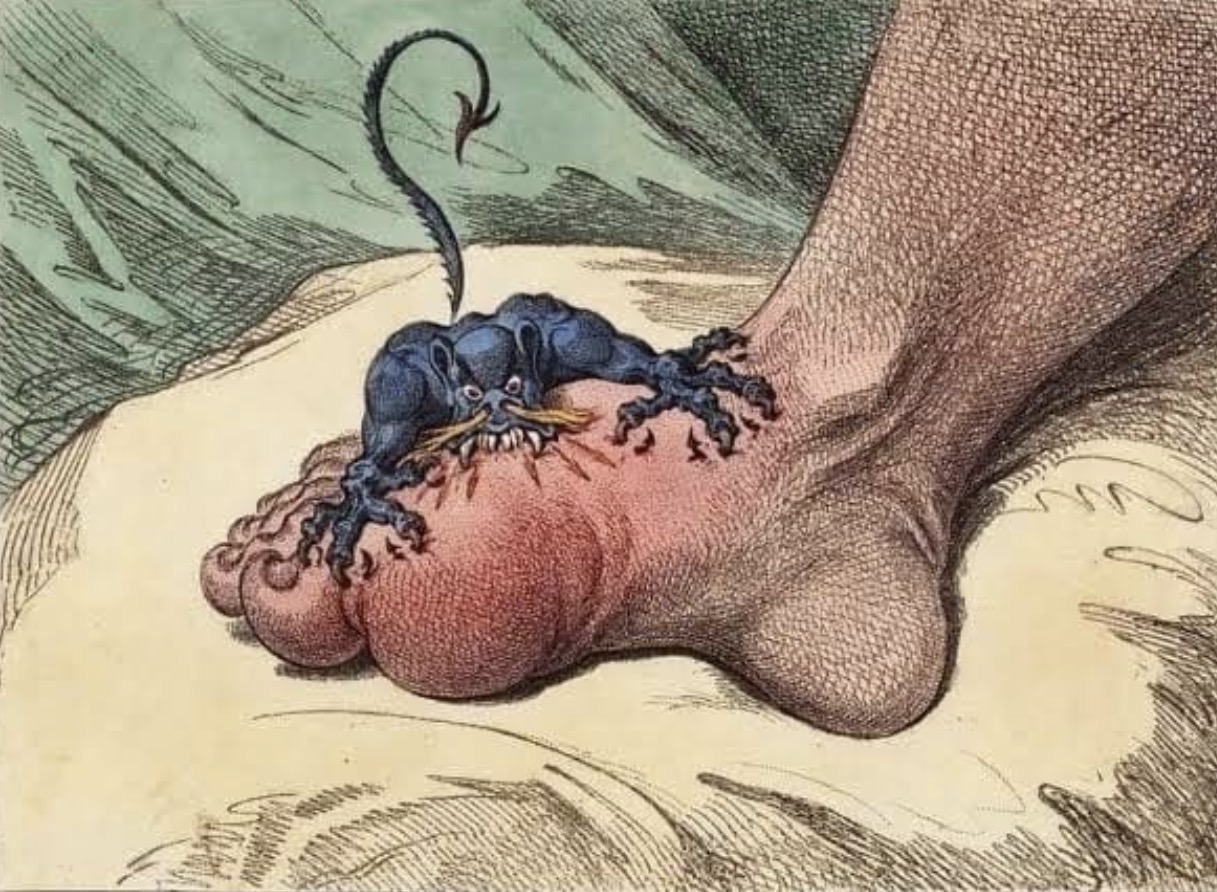
If you are currently struggling with gout, I can certainly feel your pain.
I dealt with severe gout pain for months, and it was one of the most frustrating and painful experiences of my life. There were days when walking was extremely difficult. I spent countless hours online searching for answers.
What foods should I eat?
What foods should I avoid?
How do I lower my uric acid?
How long does it take for gout to get better?
And perhaps the biggest question of all: Will I ever feel normal again?
At one point, I was using crutches and waking up every morning wondering whether the pain would finally be gone.
Eventually, things did improve.
My uric acid dropped from 6.9 mg/dL to 3.8 mg/dL, and my experience taught me quite a bit about gout, uric acid, allopurinol, diet and just how long the process can sometimes take.
This is my personal experience rather than medical advice. Gout should be diagnosed and treated by a healthcare professional because other conditions can cause similar joint symptoms.
My First Gout Attack
A few years ago, I woke up with sudden, intense pain in my right big toe.
I had never experienced anything quite like it.
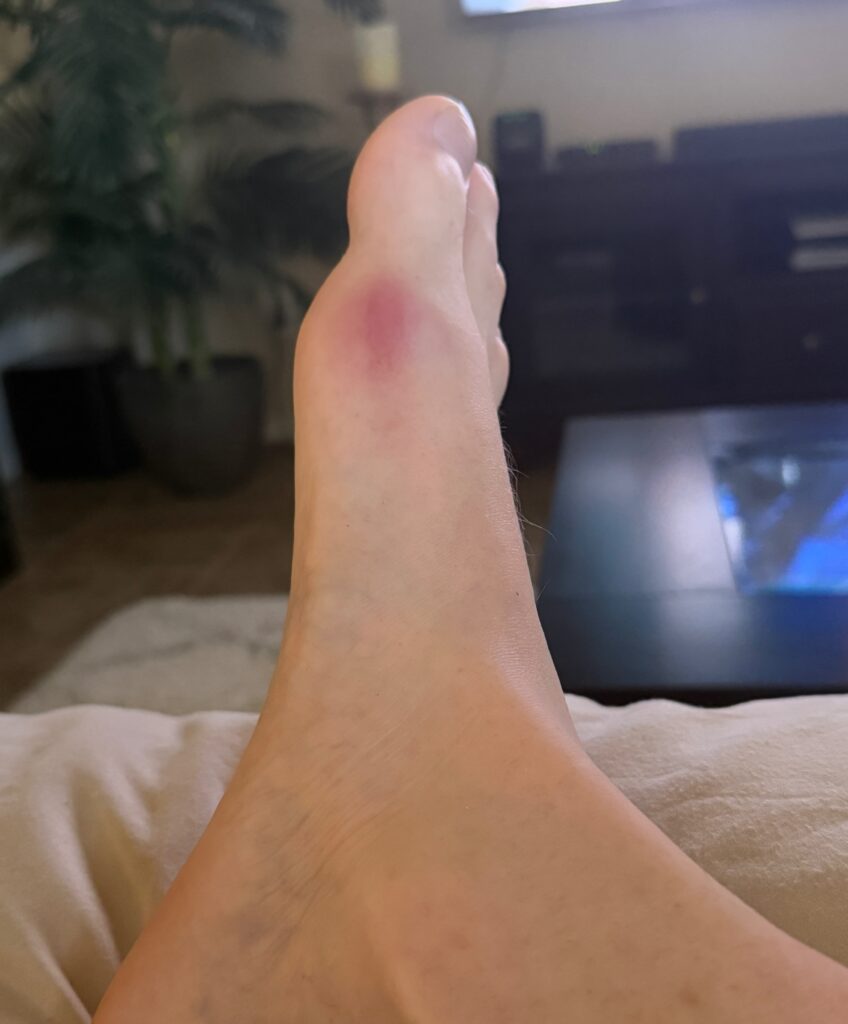
After researching the symptoms, gout seemed like a possible explanation, and I eventually received treatment for the attacks. I was prescribed colchicine to help manage a flare.
The first time I took it, I felt dramatically better by the following day.
About eight months later, the pain returned.
Once again, colchicine helped.
Over the next couple of years, this happened several more times. Because the attacks were relatively infrequent and medication seemed to get me through them, I didn’t make significant changes to my diet or lifestyle.
That eventually caught up with me.
The Gout Attack That Changed Everything
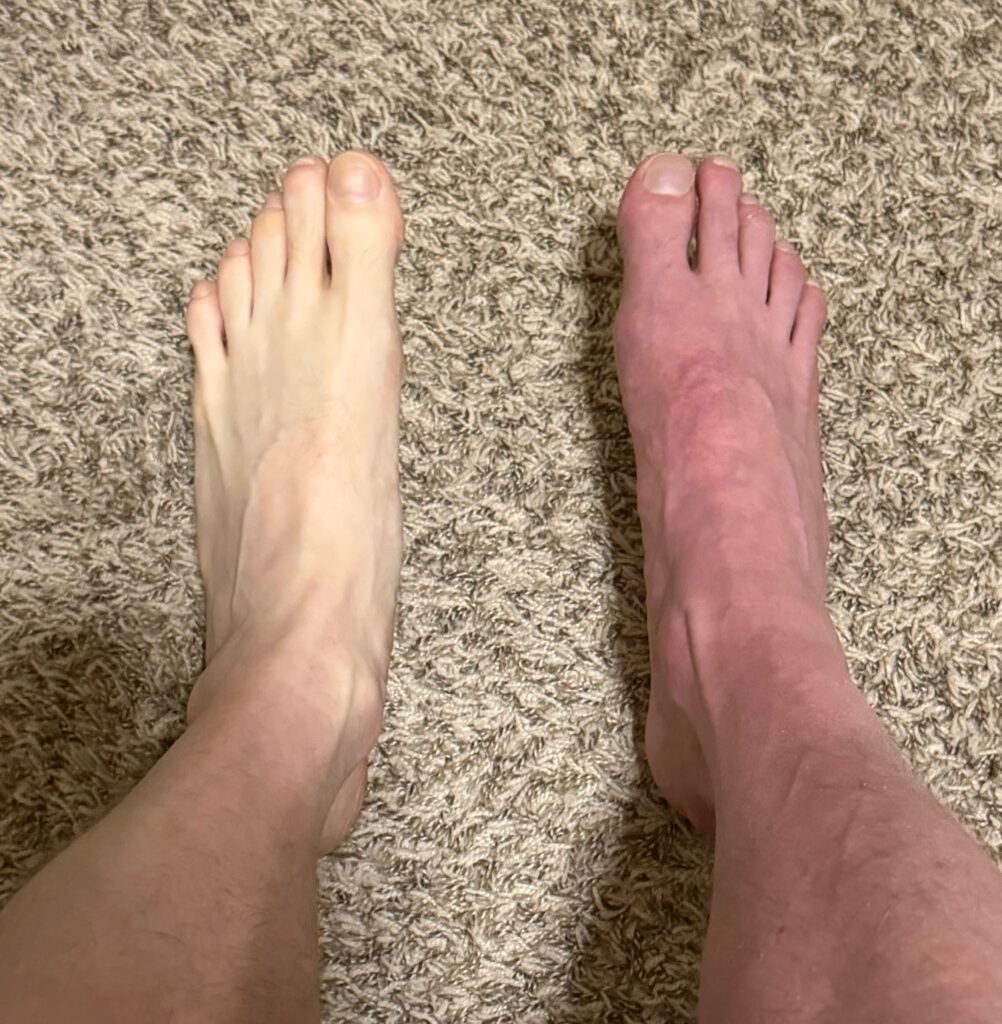
Then came the attack that made me take gout seriously.
I went to an all-you-can-eat sushi buffet and ate a tremendous amount of seafood, including sashimi, tuna tartare and countless sushi rolls.
The next day, I could barely walk.
I took the medication I had previously used during attacks, expecting the pain to disappear like it had before.
It didn’t.
The next day I still couldn’t walk normally.
Then another day passed.
Instead of disappearing quickly, the pain continued for weeks.
That was when I realized I needed to stop treating each flare as an isolated event and start paying attention to the underlying problem: my uric acid.
What Causes Gout?
Gout is a type of inflammatory arthritis caused by urate crystals accumulating in and around joints.
Gout has historically been called the “disease of kings” because it was often associated with wealth and royalty. This is because the condition was mistakenly thought to be caused purely by overindulgence in rich foods enjoyed by kings and those who could afford them.
Your body naturally produces uric acid when it breaks down substances called purines. Normally, uric acid dissolves in the blood and the kidneys remove much of it through urine.
Problems can occur when the body produces too much uric acid or doesn’t eliminate enough of it.
Over time, urate can form needle-shaped crystals around the joints. When the immune system reacts to those crystals, the result can be the intense inflammation, swelling and pain associated with a gout flare.
The big toe is probably the joint most associated with gout, but gout can also affect areas including the ankles and knees.
One thing I learned during this process is that diet isn’t the entire story.
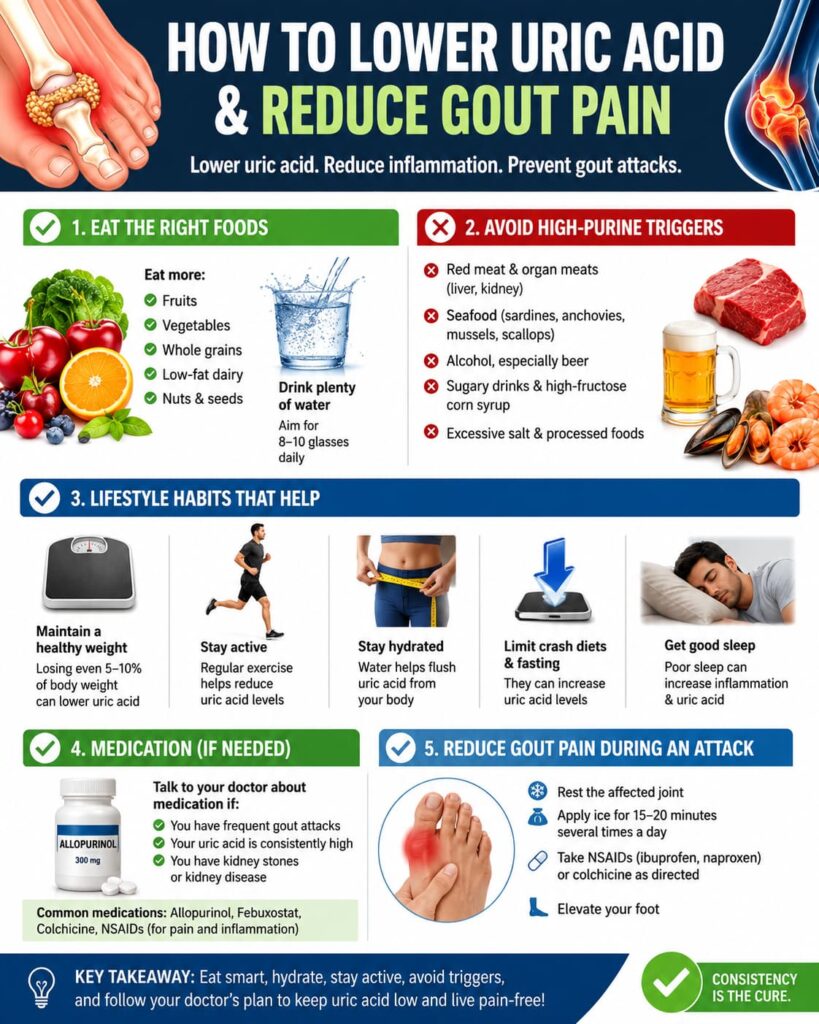
Some foods and drinks can contribute to gout or trigger attacks in some people, but genetics, kidney function, medications, body weight and other health factors can also affect uric acid levels.
What Uric Acid Level Should You Aim For With Gout?
This was one of the most important things I learned.
The American College of Rheumatology states that gout treatment generally aims for a blood uric acid level of 6 mg/dL or lower.
Getting below that level matters because lowering uric acid sufficiently can allow existing urate crystal deposits to gradually decrease while helping prevent additional crystals from forming.
The exact treatment target can vary depending on the individual, so this is something to discuss with your doctor.
When my uric acid was first tested, my result was:
6.9 mg/dL
That number became my starting point.
My Experience Taking Allopurinol
My doctor prescribed allopurinol to lower my uric acid.
Allopurinol is a medication that reduces the body’s production of uric acid. It is commonly used as a long-term treatment to help prevent gout attacks rather than as a medication to immediately stop an attack that is already happening.
I started at 100 mg per day.
After about a month, I was still experiencing pain in my big toe.
My dose was later increased to 200 mg per day under my doctor’s care.
One lesson I learned is that starting urate-lowering medication doesn’t necessarily mean all gout symptoms immediately disappear.
In fact, gout flares can still happen after starting treatment while uric acid levels are changing. Because of this, doctors sometimes use medications such as colchicine or anti-inflammatory drugs during the early stages of urate-lowering treatment.
My symptoms gradually improved.
Eventually, I could walk normally again.
After weeks of dealing with pain, crutches and difficulty getting around, that felt like a huge victory.
My Uric Acid Levels: 6.9 to 3.8 mg/dL
Two things that I recommend are joining a Facebook group for those who struggle with gout. It definitely helps knowing that you’re not the only one dealing with this and you can also find tips to help manage it. I also ordered a uric acid monitoring system which I found very helpful in tracking my numbers.
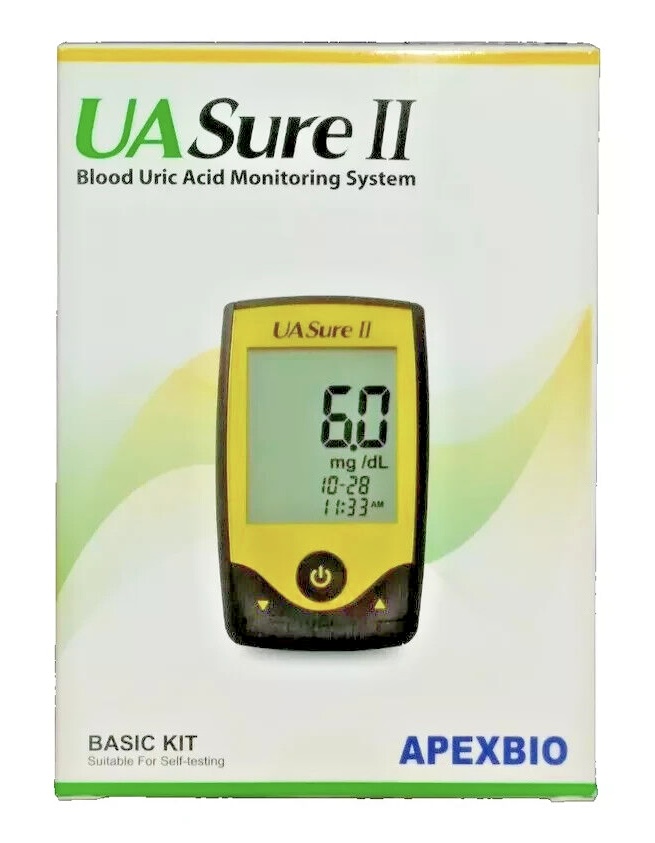
I became very interested in tracking my uric acid because I wanted to see whether what I was doing was actually making a difference.
Here were my results:
April 1 — 6.9 mg/dL
May 1 — 4.8 mg/dL
June 1 — 3.9 mg/dL
July 1 — 3.8 mg/dL
Watching those numbers decline helped me understand that controlling gout can be a long-term process rather than something that happens overnight.
My results are only my experience. Everyone responds differently to medication, and allopurinol doses should be determined by a healthcare professional based on factors including uric acid levels, kidney function and the person’s overall health.
Can You Still Have Gout Pain After Starting Allopurinol?
Yes.
This was confusing to me at first.
I assumed that once I started medication to lower uric acid, the gout pain should simply disappear.
It isn’t always that simple.
Allopurinol lowers uric acid over time. It isn’t a pain medication and isn’t intended to immediately treat the inflammation from an active gout attack.
Some people can actually experience additional flares during the early months of urate-lowering treatment.
That doesn’t automatically mean the medication isn’t working.
For me, the more useful measure was following my uric acid levels and discussing my symptoms and treatment with my doctor rather than trying to determine what was happening based solely on where my foot hurt.
How Long Does It Take Gout Crystals to Dissolve?
This is probably one of the questions I searched for more than anything else.
Unfortunately, there isn’t one answer that applies to everyone.
Lowering uric acid below the treatment target creates conditions that allow existing urate deposits to gradually dissolve. But deposits that accumulated over years don’t necessarily disappear in a few days or weeks.
How long this takes can depend on how much crystal buildup exists, how long someone has had gout and how consistently uric acid remains below the target level.
That’s one reason long-term uric acid control is so important.
Feeling better doesn’t necessarily mean it’s time to stop treatment. Anyone taking prescribed urate-lowering medication should talk with their doctor before changing or stopping it.
Foods I Cut Back On After My Gout Attacks
I didn’t completely eliminate every food associated with gout.
Instead, I made several changes that I felt I could maintain over the long term.
Red Meat
I have always been a big meat eater.
I still eat meat, but I’ve become much more conscious of how much red meat I’m consuming.
Beer
I also cut back substantially on beer.
Alcohol — particularly beer — is commonly associated with an increased risk of gout attacks.
I decided drinking less beer was a reasonable trade-off if it could help reduce my chances of experiencing another attack like the one that left me on crutches.
Sugary Drinks
I also became more aware of drinks containing large amounts of sugar and fructose.
Instead of assuming one particular food causes gout, I’ve found it more helpful to look at my overall eating and drinking habits.
Seafood
My terrible attack after the sushi buffet definitely made me more cautious about eating huge quantities of seafood at once.
I still enjoy seafood, but I don’t need an unlimited mountain of it.
Moderation became much more important to me.
What About Coffee and Gout?
I hated coffee for most of my life.
Then, while researching gout, I came across research examining an association between coffee consumption and uric acid or gout risk.
That doesn’t mean coffee is a gout treatment, and I wouldn’t start drinking it specifically as a substitute for proper medical care.
But somewhere along the way, I started having a cup of coffee a day.
And surprisingly, I actually learned to enjoy it.
Who knew?
What Helped Me Most With Gout?
Looking back, several things made the biggest difference for me.
The first was finally taking my uric acid level seriously instead of concentrating only on stopping individual attacks.
The second was working with my doctor on long-term uric-acid-lowering treatment.
The third was making realistic changes to my diet instead of trying to follow an impossibly restrictive diet for a few weeks and then abandoning it.
And finally, tracking my uric acid gave me something measurable.
Rather than wondering whether I was making progress, I could actually see my numbers change:
6.9 → 4.8 → 3.9 → 3.8 mg/dL
For me, that was extremely encouraging.
Can Gout Be Cured?
You’ll often see people online searching for a “gout cure.”
I did exactly the same thing.
Gout is better thought of as a condition that can often be controlled extremely well with appropriate treatment rather than something fixed with a single permanent cure.
The National Institute of Arthritis and Musculoskeletal and Skin Diseases notes that with diagnosis, treatment and lifestyle changes, gout is one of the most controllable forms of arthritis.
For many people, maintaining uric acid at the appropriate level can greatly reduce or potentially eliminate gout attacks.
That was ultimately what I wanted.
I didn’t need a miracle cure.
I wanted my life back.
What I Wish I Knew When My Gout Started
If I could go back and talk to myself after that first attack, I would tell myself not to ignore it just because the pain disappeared.
I spent too much time thinking:
The attack is gone, so the problem is gone.
Those aren’t necessarily the same thing.
I would have started monitoring my uric acid sooner.
I would have learned more about long-term gout management.
And I would have discussed preventative treatment with my doctor instead of simply waiting for the next attack.
Most importantly, I wouldn’t have assumed that gout meant I’d never be able to live normally again.
Final Thoughts
Gout was one of the most painful experiences I’ve dealt with.
When I was walking on crutches and struggling just to get around my house, it was difficult to imagine reaching a point where my foot felt normal again.
But things improved.
My uric acid went from 6.9 mg/dL to 3.8 mg/dL, my severe pain eventually went away, and I learned much more about how gout is managed.
My biggest takeaway is simple:
Don’t focus only on getting through the next attack. Pay attention to your uric acid and the long-term management of gout.
Work with your healthcare provider, have your uric acid monitored, take prescribed medication as directed and make lifestyle changes you can actually maintain.
Being able to walk without thinking about every step is something I once took completely for granted.
I don’t anymore.
Medical Sources and Further Reading
For factual medical information about gout and its treatment, I recommend consulting:
- American College of Rheumatology — Gout
- National Institute of Arthritis and Musculoskeletal and Skin Diseases — Gout
- MedlinePlus — Gout
- MedlinePlus — Allopurinol
This article describes my personal experience with gout and should not be considered medical advice. Always discuss diagnosis, medications, dosage changes and persistent joint pain with a qualified healthcare professional.